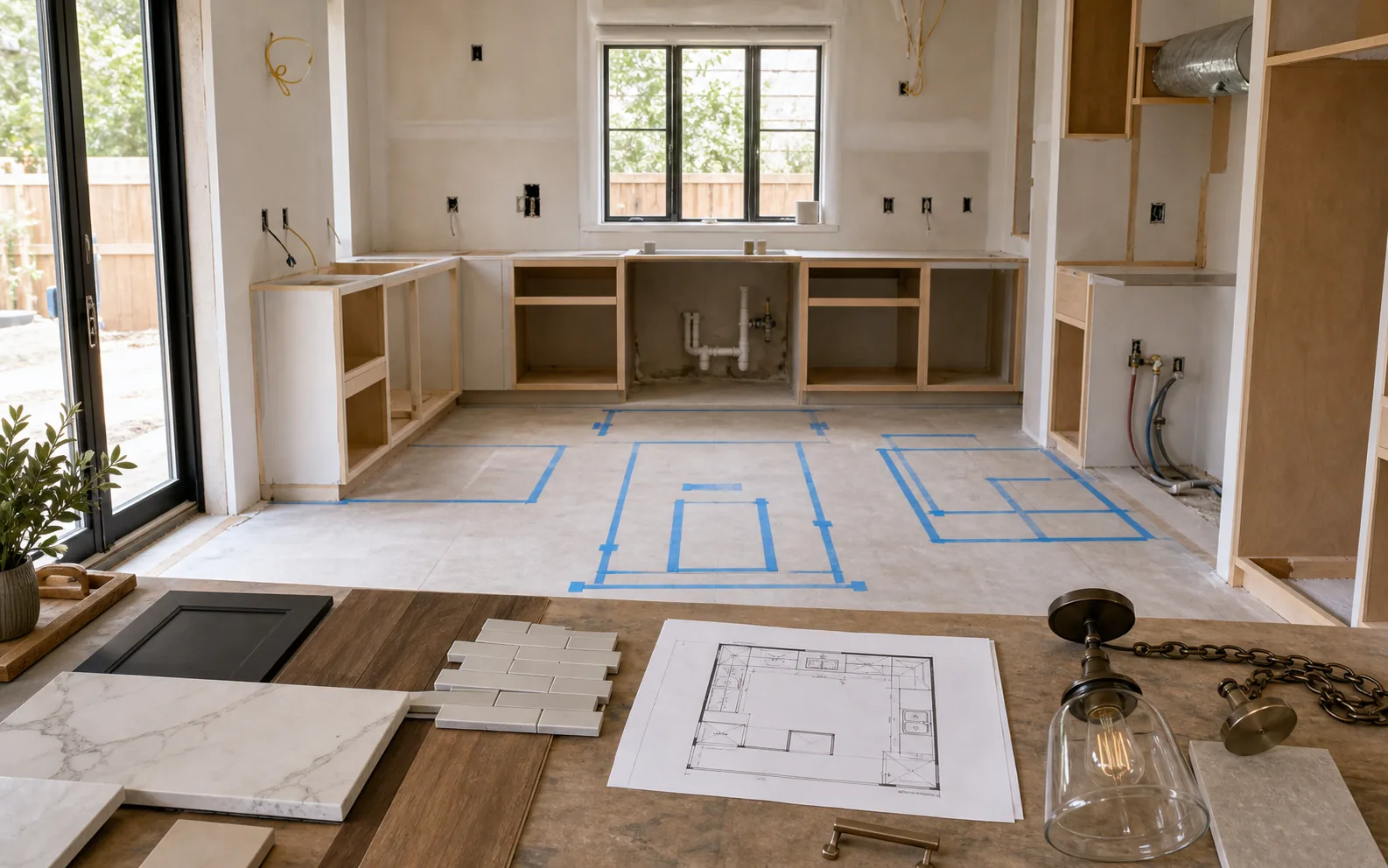
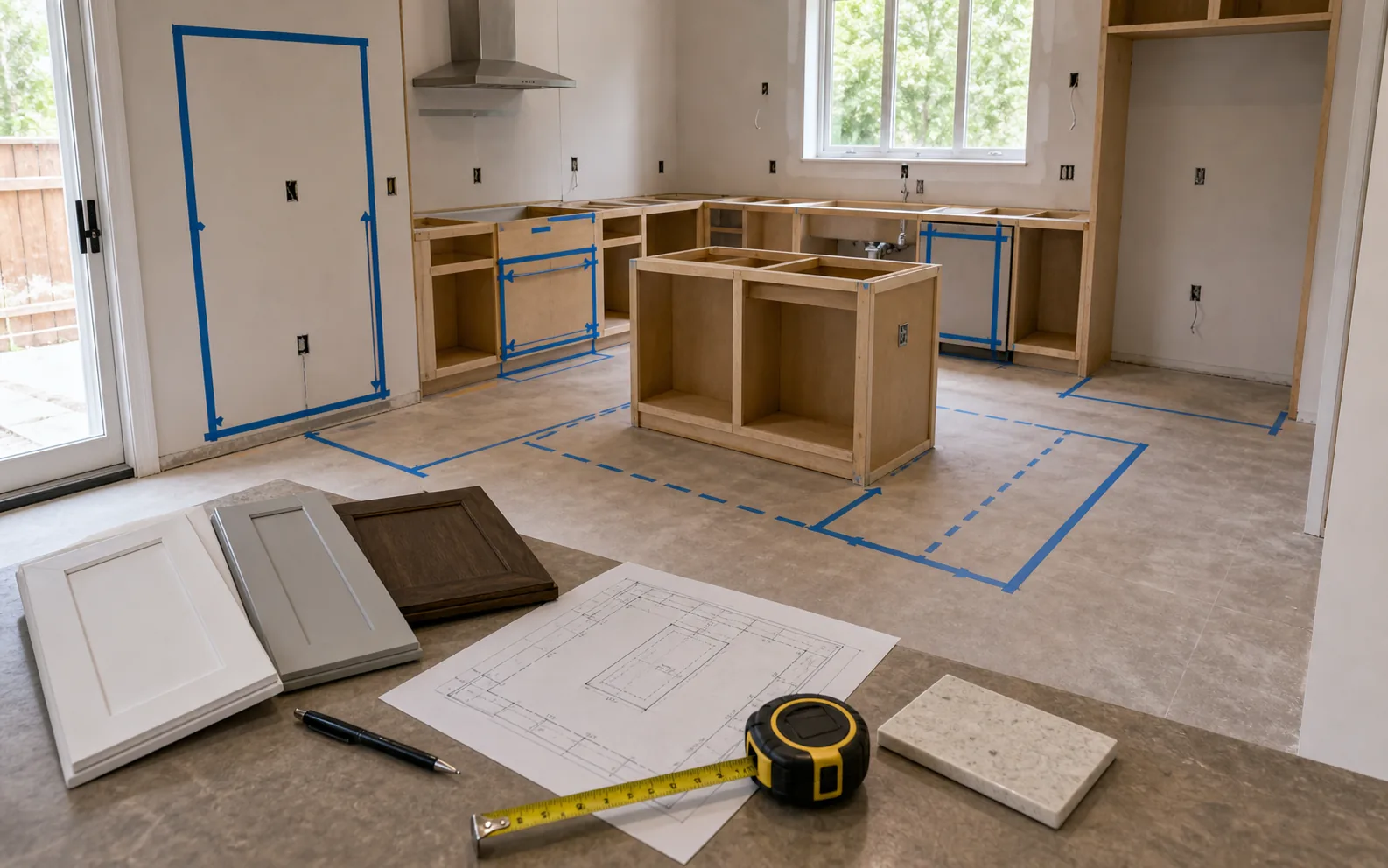
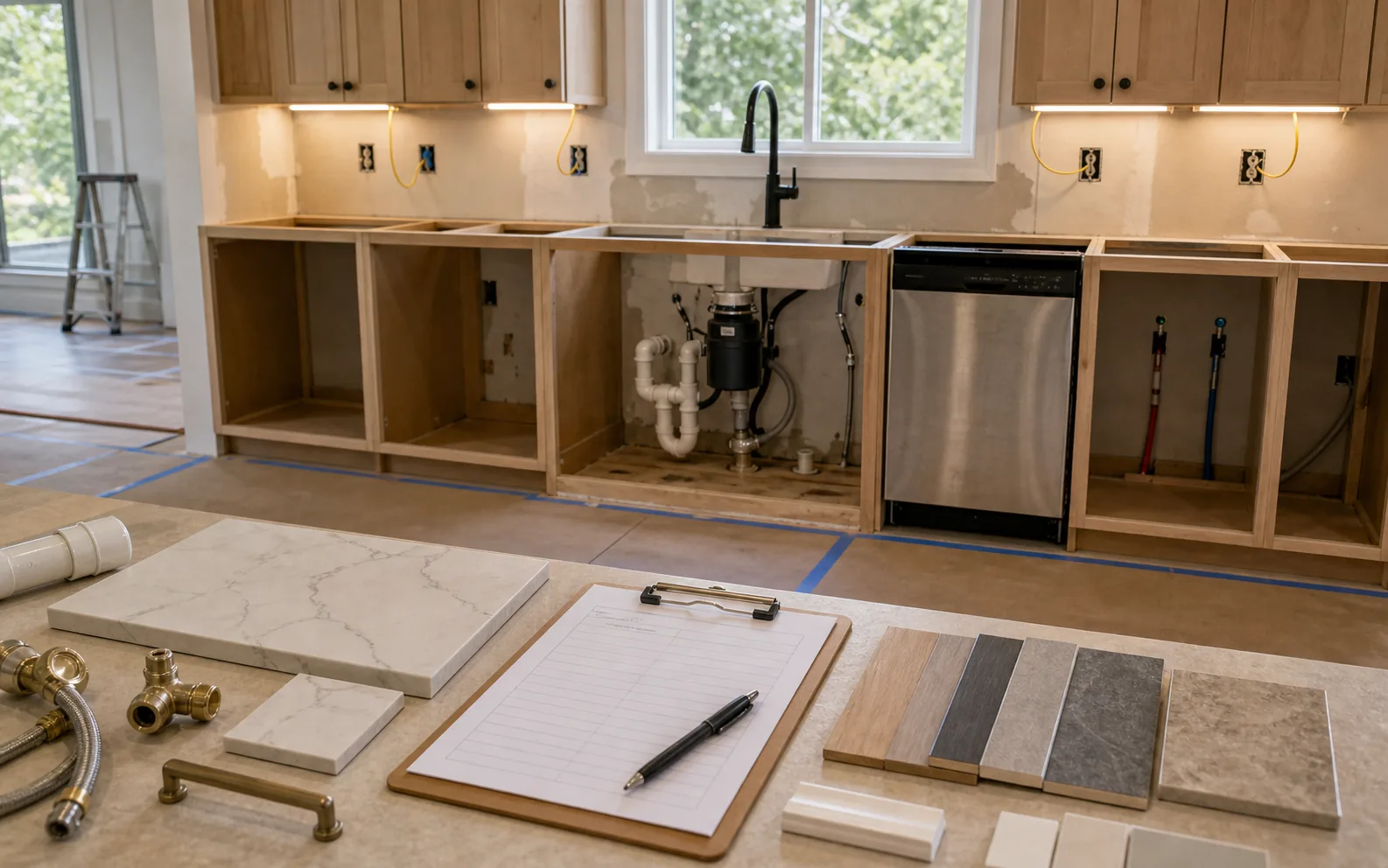
Same size does not mean same price
Two Houston kitchens can be the same size and still price very differently. The cost depends less on square footage alone and more on what has to move, what has to be repaired, what level of cabinets and finishes you choose, and how the kitchen connects to the rest of the house.
Before asking for a final number, decide whether you are keeping the same layout, changing storage and finishes, or moving walls, plumbing, appliances, lighting, and flooring.
The 3 basic kitchen remodel levels
| Remodel level | What usually stays | What usually changes | Why cost changes |
|---|---|---|---|
| Cosmetic refresh | Layout, cabinets, plumbing, appliance locations | Paint, hardware, backsplash, lighting updates, small repairs | Lower cost because major trade work is limited |
| Same-layout remodel | Sink, appliance locations, walls | Cabinets, counters, backsplash, fixtures, lighting, flooring, paint | More cost because cabinets, counters, plumbing connections, electrical details, and finishes interact |
| Layout-change remodel | Very little | Walls, appliance locations, sink location, island, lighting, flooring, possibly windows or openings | Highest cost because plumbing, electrical, framing, drywall, flooring, cabinets, counters, and inspections may all be affected |
Kitchen cost drivers homeowners underestimate
Moving plumbing
Moving a sink, dishwasher, icemaker line, or gas connection can affect walls, floors, cabinets, counters, and inspections.
Moving appliances
Changing refrigerator, range, oven, microwave, hood, or dishwasher locations can affect electrical, ventilation, cabinet layout, appliance clearances, and countertop planning.
Cabinet decisions
Cabinets affect storage, appliance fit, countertop templating, fillers, panels, crown, trim, hardware, backsplash layout, and schedule.
Electrical and lighting
Older kitchens may need outlet corrections, dedicated circuits, GFCI protection, under-cabinet lighting, recessed lighting, switches, island power, or panel review.
Flooring transitions
If the kitchen opens into living or dining areas, the flooring scope may extend beyond the cabinet footprint.
Hidden conditions
After demolition, the scope may change because of old repairs, uneven framing, damaged drywall, plumbing issues, electrical surprises, or flooring and subfloor problems.
Houston-area note
In older Houston homes, kitchen scopes can be affected by slab conditions, old electrical layouts, previous remodel layers, flooring height changes, cast-iron or aging drain lines, attic access, ventilation paths, and how open-plan flooring connects to nearby rooms.
In condos or HOA-controlled properties, building rules, work hours, access, elevators, parking, and approval requirements can also affect the real scope.
Layout is not just looks
A kitchen has to work when refrigerator doors open, dishwasher doors drop, drawers pull out, people walk through, and someone is cooking. Before cabinets are ordered, the layout should be checked for appliance swings, aisle space, landing areas, seating clearance, trash location, lighting, and traffic flow.
NKBA kitchen planning guidance includes work-aisle recommendations of at least 42 inches for one cook and 48 inches for multiple cooks, plus landing-area guidance for appliances such as refrigerators.
Photos to send before a kitchen scope review
Good photos help show whether the project is a refresh, same-layout remodel, or layout-change remodel.
- The kitchen from each corner
- Sink wall
- Range or cooktop wall
- Refrigerator location
- Dishwasher location
- Pantry or storage areas
- Ceiling lights
- Flooring transitions into nearby rooms
- Electrical panel if accessible
- Any walls you want removed or changed
- Any water stains, damaged flooring, cracks, or old repair areas
Related next steps
Checklist
- Layout changes
- Cabinet type
- Counter material
- Backsplash area
- Lighting plan
- Electrical updates
- Flooring transitions
- Appliance fit
- Paint and trim
Related project
Family Kitchen Refresh
See how cabinet, layout, lighting, and finish decisions shape a kitchen scope.