
A mini-split is not automatically better than central AC
Many homeowners with an older central AC system assume the only option is another central system. Sometimes that is true. But in Houston-area homes, the better answer may depend on which rooms are uncomfortable, how the ducts perform, where the equipment can go, and how much finish repair will be needed.
Mini-splits can work well for additions, garages, converted spaces, rental units, home offices, upstairs rooms, and rooms at the end of weak duct runs. But the installation still needs proper sizing, placement, condensate drainage, electrical planning, line-set routing, service access, and finish repair.
Central AC vs. mini-split vs. hybrid plan
| Option | Best when | Watch out for |
|---|---|---|
| Central AC replacement | Whole house has similar comfort needs and ducts are in good shape | Old ducts, attic losses, poor zoning, rooms far from the air handler |
| Single-zone mini-split | One room or converted space has a specific comfort problem | Head placement, drain route, electrical, exterior appearance |
| Multi-zone mini-split | Several separate rooms need independent control | Sizing, short cycling, line-set routing, maintenance access |
| Hybrid plan | Main home uses central AC, problem spaces use mini-splits | Controls, service access, exterior equipment layout, finish repair |
Plan the ugly details before install day
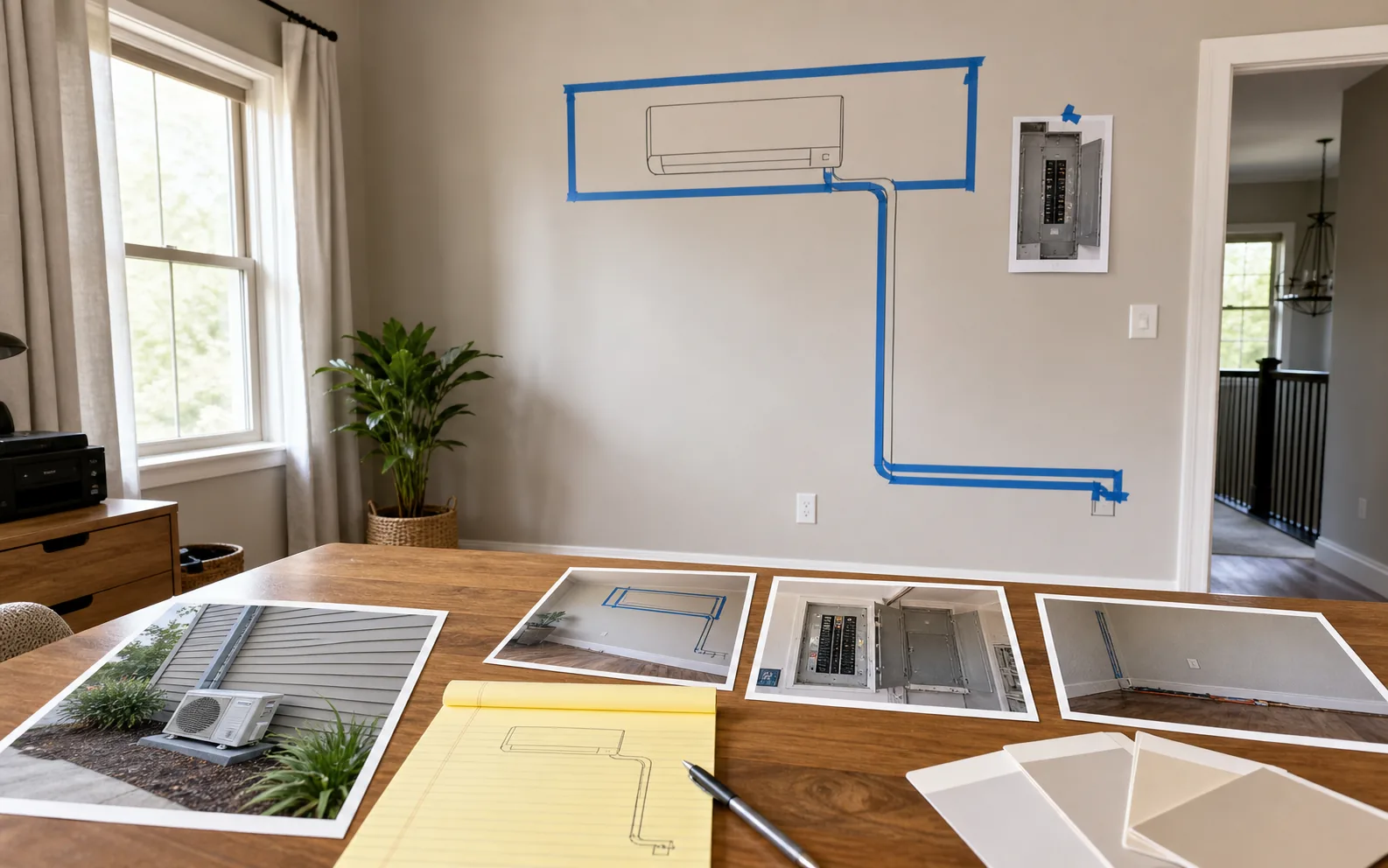
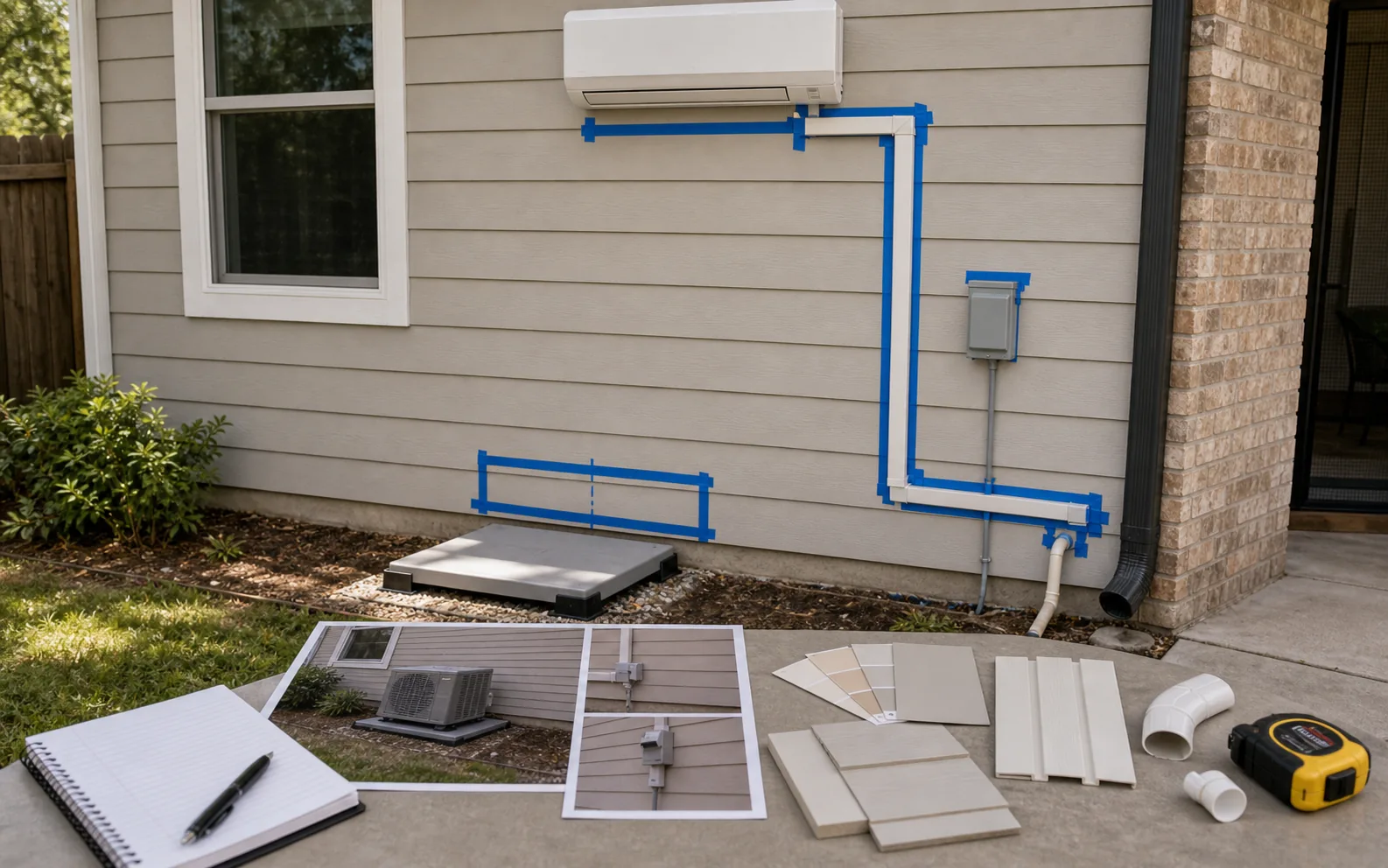
A mini-split installation can look clean or awkward depending on planning. The mechanical decision affects the finished room, the exterior wall, electrical routing, and future access.
- Where the indoor head will go
- Where the line set will exit
- Where condensate will drain
- Where the outdoor unit will sit
- How the electrical disconnect will be handled
- How the wall penetration will be sealed
- How the exterior line cover will look
- Whether drywall, siding, trim, or paint repair is included
- How the unit will be accessed for service
Sizing and placement matter
DOE notes that ductless mini-splits require correct sizing and placement. Oversized or poorly placed air handlers can short cycle, waste energy, and fail to control temperature or humidity properly.
That matters in Houston because a room can be cool enough but still uncomfortable if humidity is not managed well. Equipment choice should be coordinated with the room load, sun exposure, insulation, duct condition, and how the space is actually used.
Photos to send for mini-split planning
Good photos help show whether the comfort solution will be simple or whether it affects wall repair, exterior appearance, drainage, electrical, or access.
- The uncomfortable room from each corner
- Existing supply and return vents
- Exterior wall on the other side of the room
- Ceiling and attic access if visible
- Nearby closets or chases
- Electrical panel if accessible
- Possible outdoor unit location
- Drainage areas outside
- Any HOA, condo, or exterior appearance restrictions
Finish repair should be in the scope
HVAC upgrades often touch drywall, exterior siding, paint, trim, electrical, attic access, and sometimes flooring or cabinets. Those finish details should be part of the scope, not an afterthought.
EuroCraft can help coordinate the remodeling side of the work so the finished room does not look like equipment was bolted onto it after the fact.
Related next steps
Checklist
- Problem rooms identified
- Old system rating and age
- Duct condition
- Mini-split model ratings
- Load calculation or sizing review
- Redundancy priority rooms
- Line-set route
- Condensate drain path
- Electrical circuit needs
- Finish repair scope
- Central vs zoned comparison
Related project
Mini-Split Zoned Comfort Plan
See how comfort planning connects to access, finish repair, and room-by-room use.