A home addition changes the existing house
A home addition is not just extra square footage. It changes how the existing house handles structure, roofing, drainage, utilities, HVAC, electrical load, windows, insulation, access, and daily living during construction.
Before drawing the dream layout, confirm what the new space must do and what the property will allow. In Houston-area homes, floodplain concerns, drainage, easements, roof tie-ins, slab height, HOA rules, and permitting can shape the project before finishes are even discussed.
Home addition feasibility flow
Define the job of the new space
Do you need a bedroom, office, guest suite, playroom, living area, gym, garage conversion, or larger kitchen connection? Each one changes privacy, storage, windows, lighting, sound, HVAC, and electrical needs.
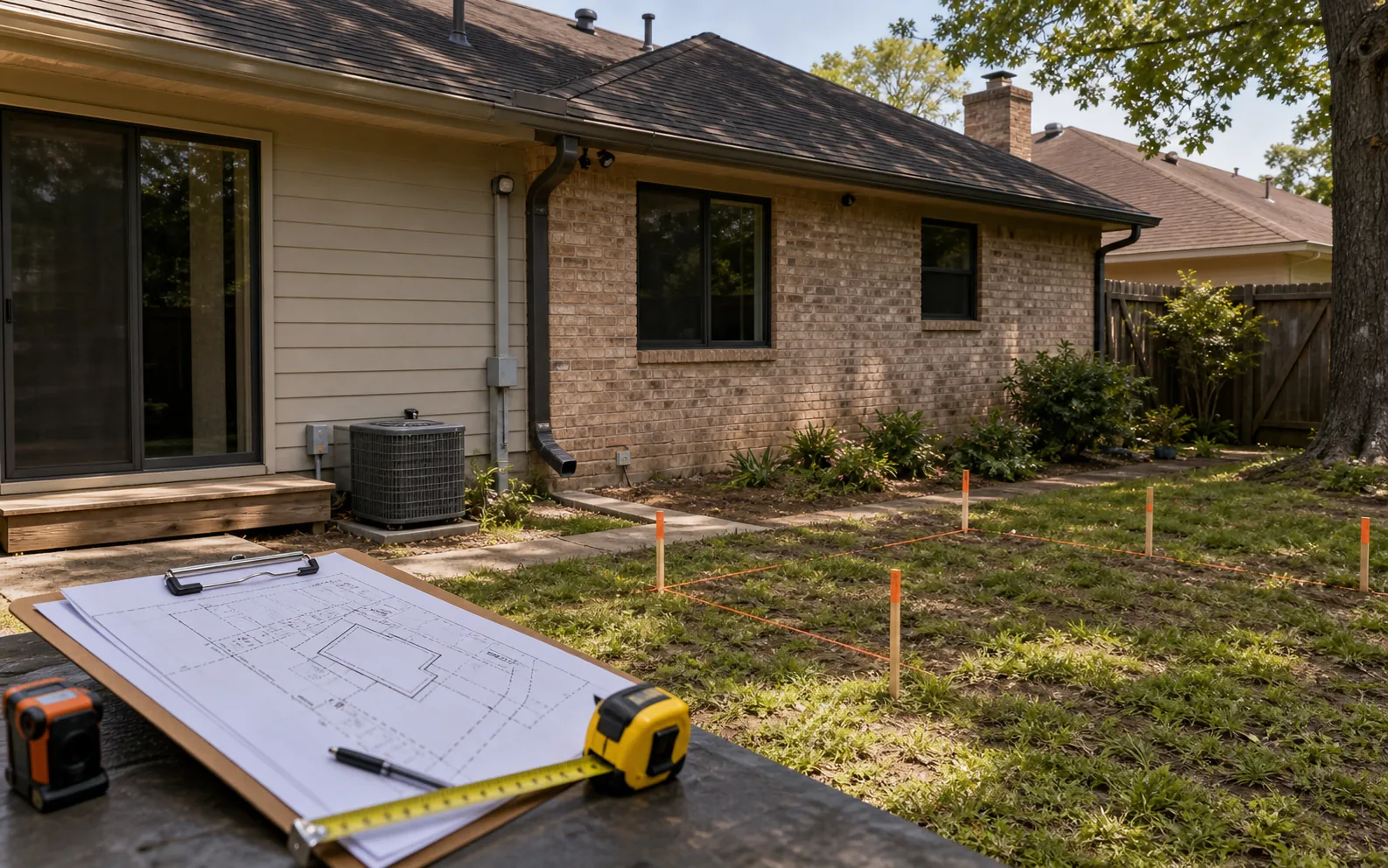
Check property constraints
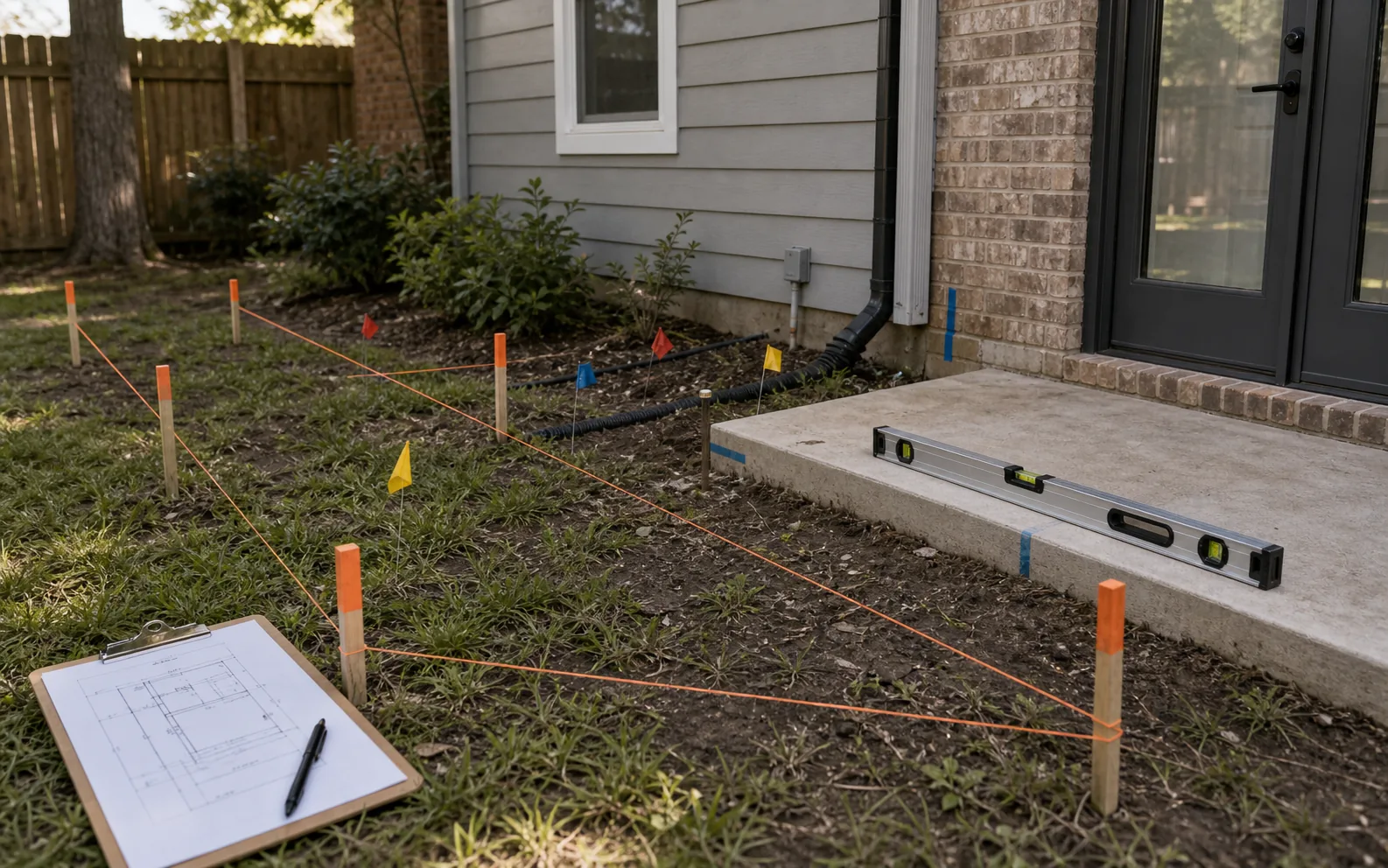
Review setbacks, easements, utilities, drainage, floodplain concerns, trees, HOA rules, and access before assuming the footprint works.
Study the existing house
The existing slab height, roof pitch, framing direction, exterior material, attic access, floor transitions, and mechanical systems affect how cleanly the addition can tie in.
Build a concept scope
Before detailed pricing, outline size, use, structure, HVAC approach, electrical needs, plumbing needs, finishes, exterior tie-ins, and likely permit or design requirements.
Price the right level of detail
A square-foot number is not enough. A real addition price depends on design, engineering, foundation, framing, roofing, exterior finishes, windows, insulation, HVAC, electrical, plumbing, drywall, flooring, paint, inspections, access, and hidden conditions.
Addition planning checklist
| Planning item | What to confirm | Why it matters |
|---|---|---|
| Purpose | Bedroom, office, suite, living space, garage conversion, kitchen expansion | The use controls layout, privacy, sound, HVAC, windows, and electrical |
| Budget range | Concept range before final design | Prevents designing a project the owner will not build |
| Property limits | Setbacks, easements, HOA rules, trees, utilities | May limit the footprint or require approvals |
| Floodplain/drainage | Floodplain status, grade, runoff, yard drainage | Additions can change water movement around the home |
| Foundation | Existing slab height, soil, tie-in approach | Bad transitions can create cracks, steps, and water problems |
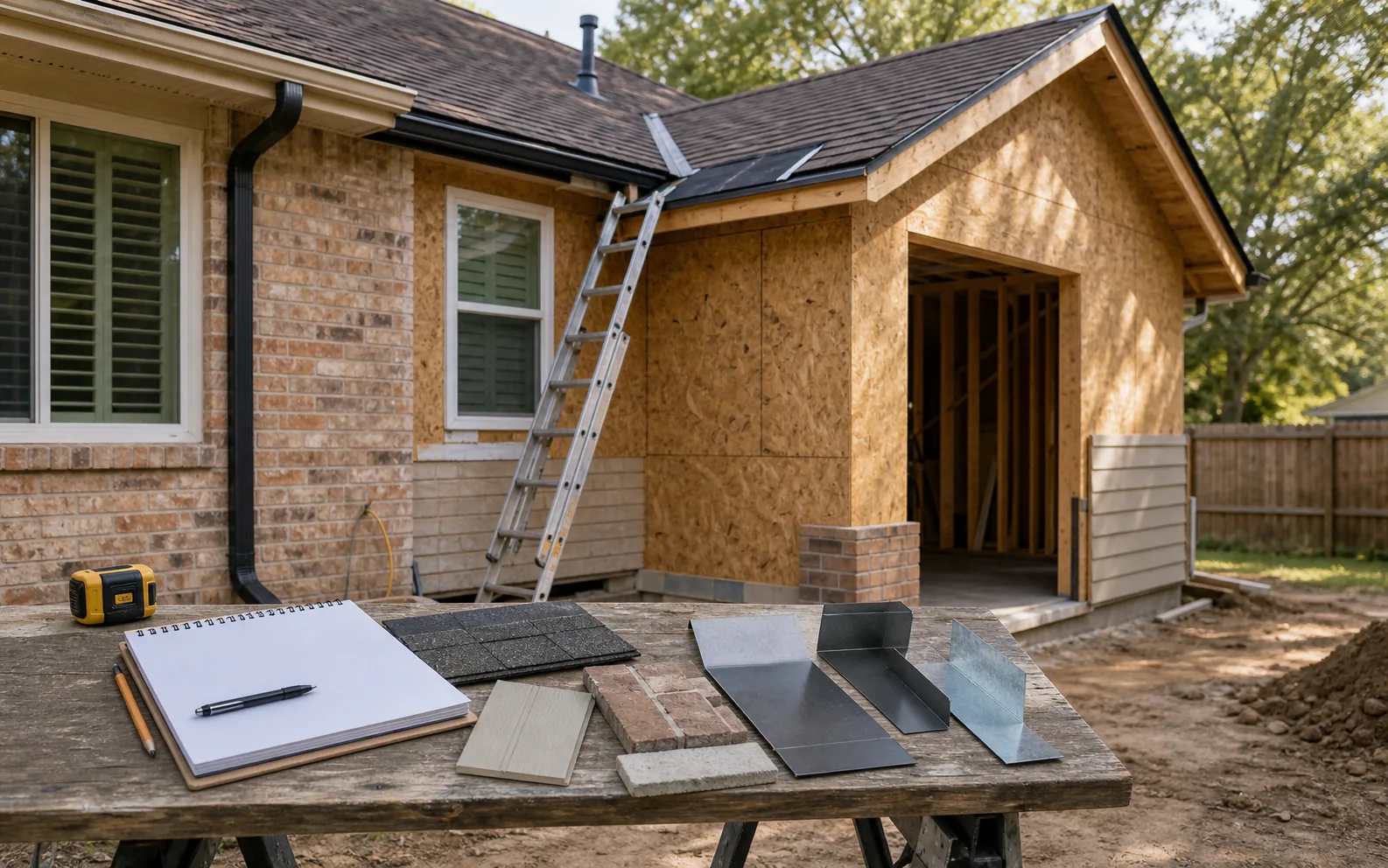
| Roof tie-in | Roof pitch, drainage, gutters, valleys, wall flashing | Roof tie-ins are major leak-risk areas |
| HVAC | Existing system capacity or separate system | Comfort problems are common when added space is not planned mechanically |
| Electrical | Panel capacity, circuits, lighting, outlets | Additions often need more than a few new outlets |
| Plumbing | Bathroom, laundry, kitchen, wet bar, drain routing | Plumbing can change slab, wall, and inspection needs |
| Exterior finish | Brick, siding, stucco, trim, paint, windows | Matching the old house affects cost and appearance |
| Access | Driveway, side yard, material storage, pets, children | Logistics affect schedule and homeowner stress |
| Permits/inspections | Jurisdiction and required inspections | Covered work may need to remain visible until approved |
Houston-area issues to check early
In Houston-area additions, do not wait until final design to discuss the constraints that can shape the footprint, tie-ins, approvals, and real cost.
- Floodplain or drainage concerns
- Yard slope and roof runoff
- Easements
- Setbacks
- Trees and roots
- Utility locations
- HOA or deed restrictions
- Existing slab height
- Roof tie-in complexity
- Attic access
- Old electrical service
- HVAC capacity
- Exterior material matching
- Construction access
Photos to send before an addition planning review
Photos help show where the addition may connect, where water moves, and what hidden constraints need early review.
- Front of the house
- Back of the house
- Both side yards
- Area where the addition may go
- Existing roof lines
- Gutters and downspouts
- Yard drainage or low spots
- Exterior walls where the addition may connect
- Electrical panel if accessible
- HVAC equipment
- Attic access if visible
- Any cracking, water stains, or existing damage
- Property survey if available
Related next steps
Checklist
- Purpose of space
- Rough size
- Budget range
- Permit jurisdiction
- HOA rules
- Drainage
- Roof tie-in
- HVAC needs
- Electrical capacity
- Access during work
Related project
Covered Patio Living Space
See how exterior connection, shade, drainage, and finish planning affect a house-connected project.