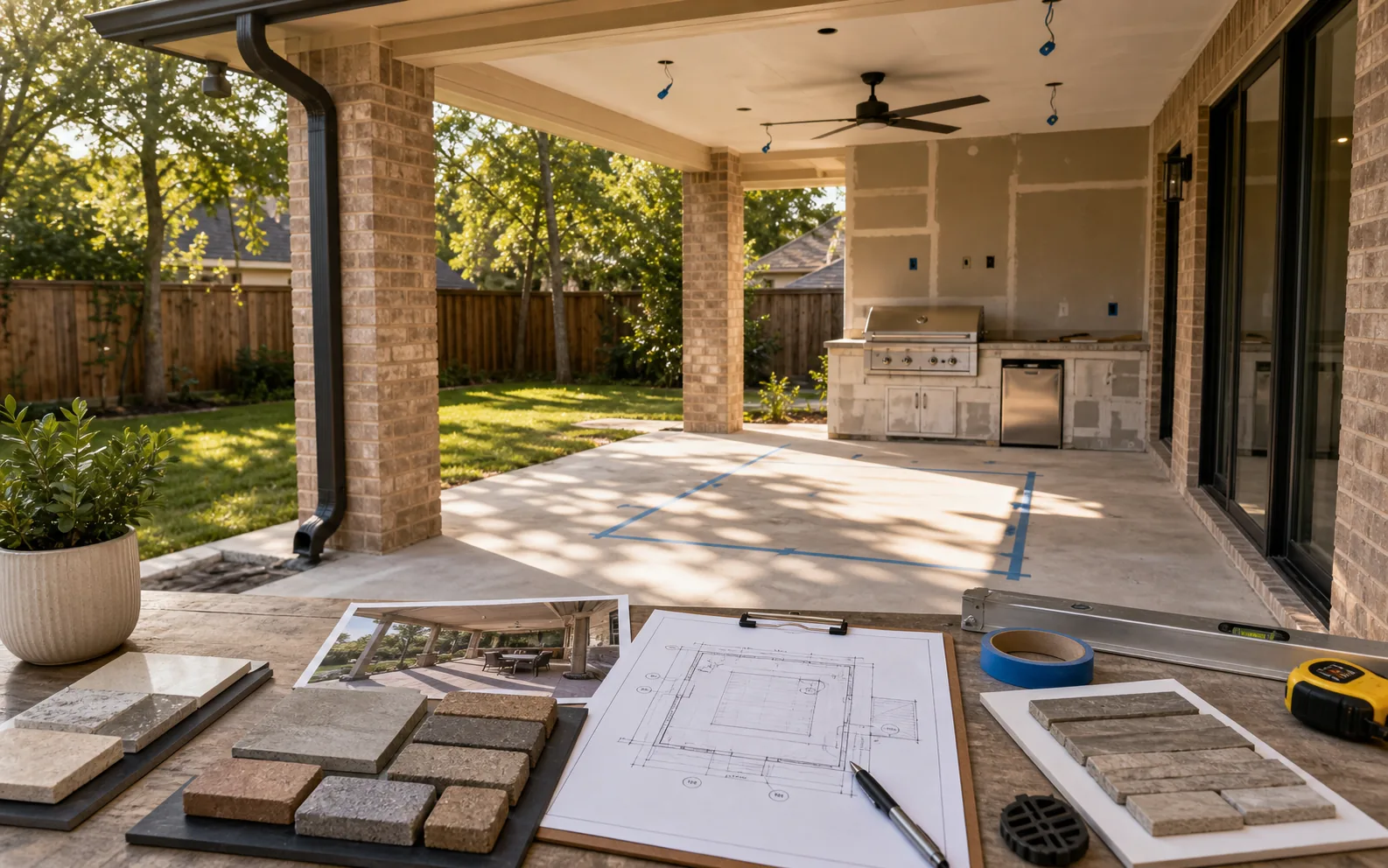
Outdoor spaces have to answer to Houston weather
An outdoor living space can look great in photos and still be uncomfortable in August or frustrating after heavy rain. In Houston, shade and drainage are not small details. They decide whether the space gets used.
Before building a patio cover, pergola, outdoor kitchen, grill island, or seating area, plan the sun exposure, roof runoff, yard slope, fan locations, lighting, smoke path, utility access, material maintenance, and how the new structure connects to the house.
Plan comfort before finishes
The outdoor space should answer practical use questions before selecting counters, stain, tile, or fixtures.
- Where does the afternoon sun hit?
- Where will people actually sit?
- Where does rainwater currently go?
- Will a new cover dump water near doors, posts, or the foundation?
- Where can fans go?
- Where can lights go?
- Where will smoke, heat, and grease travel?
- What materials will hold up to sun, rain, humidity, and maintenance?
Outdoor living planning table
| Planning item | What to check | Why it matters |
|---|---|---|
| Afternoon sun | West and southwest exposure | A patio can look good but stay too hot to use |
| Shade structure | Cover, pergola, roof tie-in, post locations | Shade affects structure, lighting, fans, drainage, and approvals |
| Drainage | Yard slope, hard surfaces, gutters, downspouts | Water should move away from the house and seating areas |
| Roof runoff | New roof area, valleys, gutters, downspouts | A patio cover can create new water problems |
| Fans | Ceiling height, seating zones, wiring | Fans need rough-in before ceilings are finished |
| Lighting | Task, ambient, steps, grill area | Lighting affects safety and evening use |
| Grill zone | Heat, smoke, grease, clearances, utilities | Guests should not pass through smoke and heat to sit down |
| Outdoor kitchen | Counter landing, cleanup path, appliance access | Poor layout makes cooking awkward |
| Materials | UV, rain, humidity, fasteners, movement, sealing | Exterior materials age differently in Houston weather |
| Maintenance | Paint, stain, sealant, caulk, hardware | A dramatic finish may not be worth constant upkeep |
| HOA/approvals | Exterior changes, roof tie-ins, visibility | Some areas require approvals before visible exterior work |
Water needs a planned path
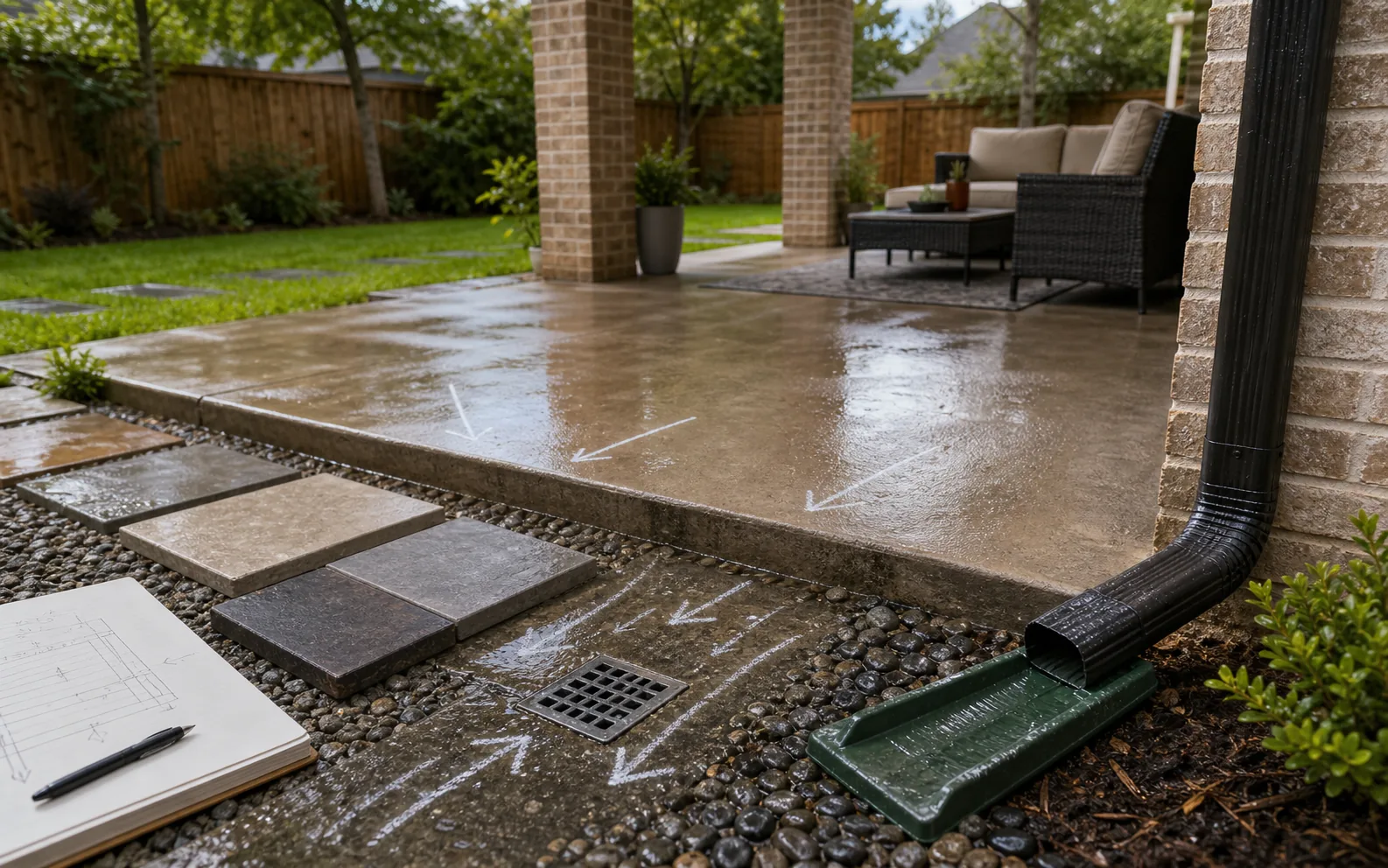
Before adding concrete, pavers, a patio cover, posts, or an outdoor kitchen, check where water goes during heavy rain. New hard surfaces can change runoff. New roof areas can concentrate water at valleys, doors, slab edges, and post bases.
The scope should explain whether gutters, downspouts, extensions, splash blocks, area drains, grading, or other drainage work are part of the project.
Building America/PNNL drainage guidance says gutters and downspouts should direct rainwater down and away from the home, and that hard surfaces around the foundation should slope away from the house.
Shade is not optional in Houston
The best seating layout will not matter if the patio gets blasted by afternoon sun. Shade planning should happen before the finished layout because it affects roof structure, beams, post locations, fan locations, lighting, gutters, and how the outdoor area connects to the house.
National Weather Service Houston/Galveston climate data for Houston Intercontinental shows normal daily highs commonly in the 90s during July and August. That supports making heat and shade central to outdoor-living planning rather than treating them as afterthoughts.
Cooking zones need space, not just appliances
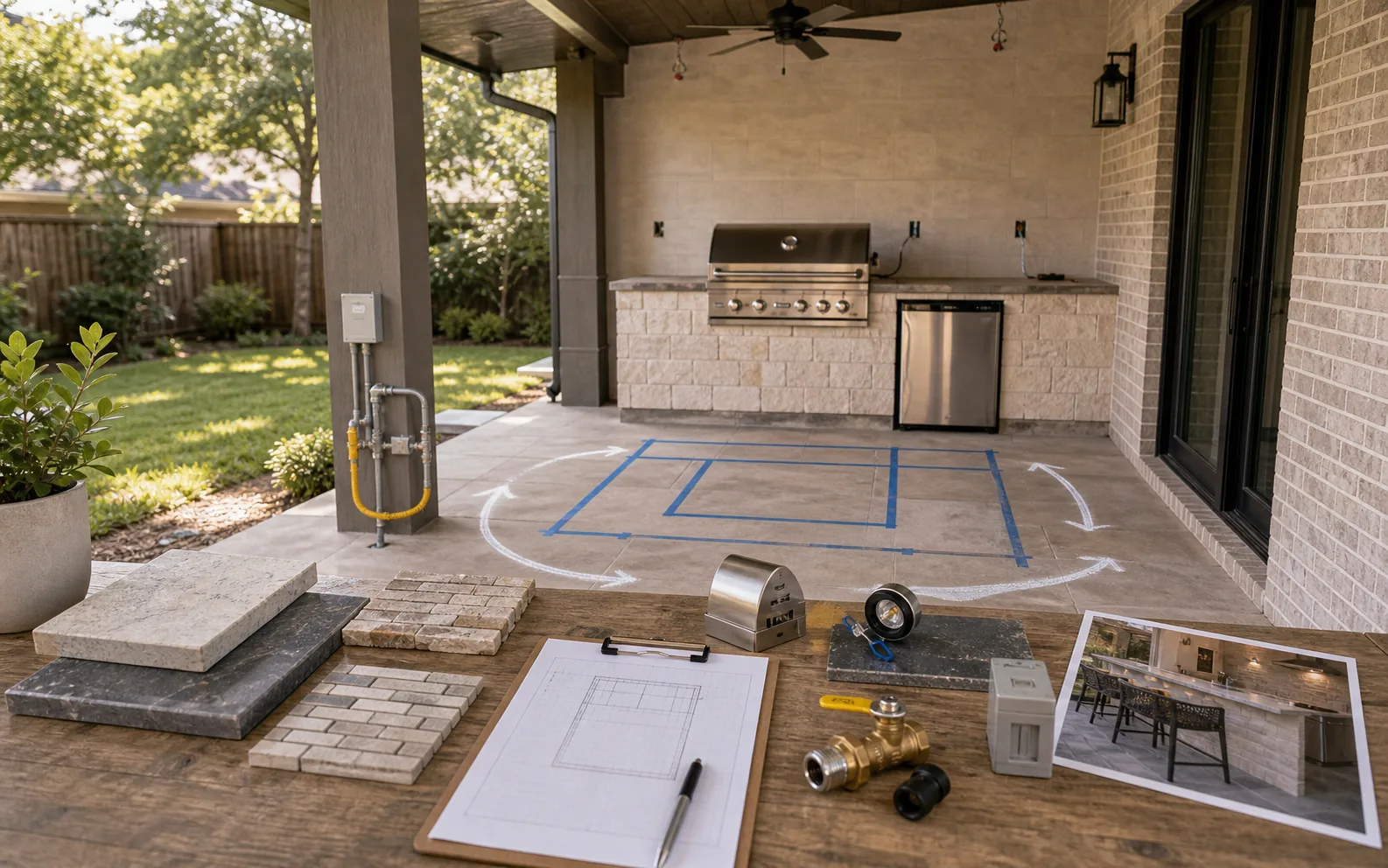
A grill island or outdoor kitchen should not be squeezed into the plan after seating is already decided.
- Heat clearance
- Smoke direction
- Grease splash
- Counter landing space
- Utility shutoffs
- Ventilation
- Cleanup path
- Lighting
- Trash location
- Distance from doors and seating
Photos to send for outdoor living planning
Photos help show sun, water, access, and how the new outdoor space can connect to the house.
- Patio or backyard from each corner
- Back of the house
- Roof line above the patio
- Gutters and downspouts
- Doors and windows facing the patio
- Areas where water collects
- Existing concrete, pavers, or deck
- Fence and privacy concerns
- Current grill location
- Desired seating area
- Electrical outlets and lighting
- Any HOA or neighborhood exterior restrictions
Related next steps
Checklist
- Sun direction
- Roof or shade structure
- Drainage
- Fan locations
- Lighting
- Grill clearance
- Counter material
- Exterior trim
- HOA requirements
Related project
Covered Patio Living Space
See how shade, roof runoff, layout, and exterior finish planning apply to outdoor living work.