
Storm and water damage repairs overlap quickly
Storm and water damage repairs can get confusing because emergency protection, mitigation, insurance paperwork, hidden damage, code corrections, and finish restoration may all overlap.
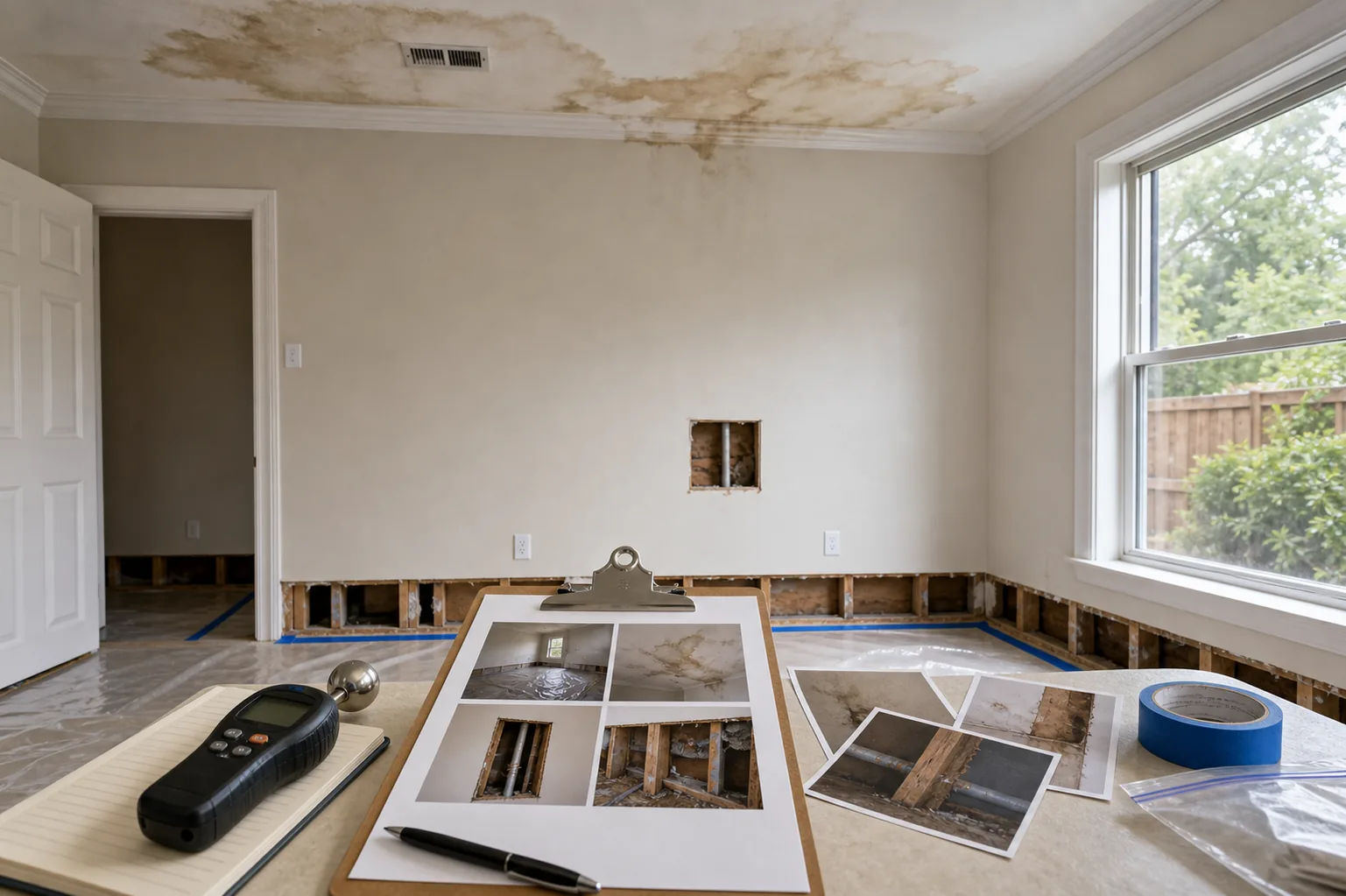
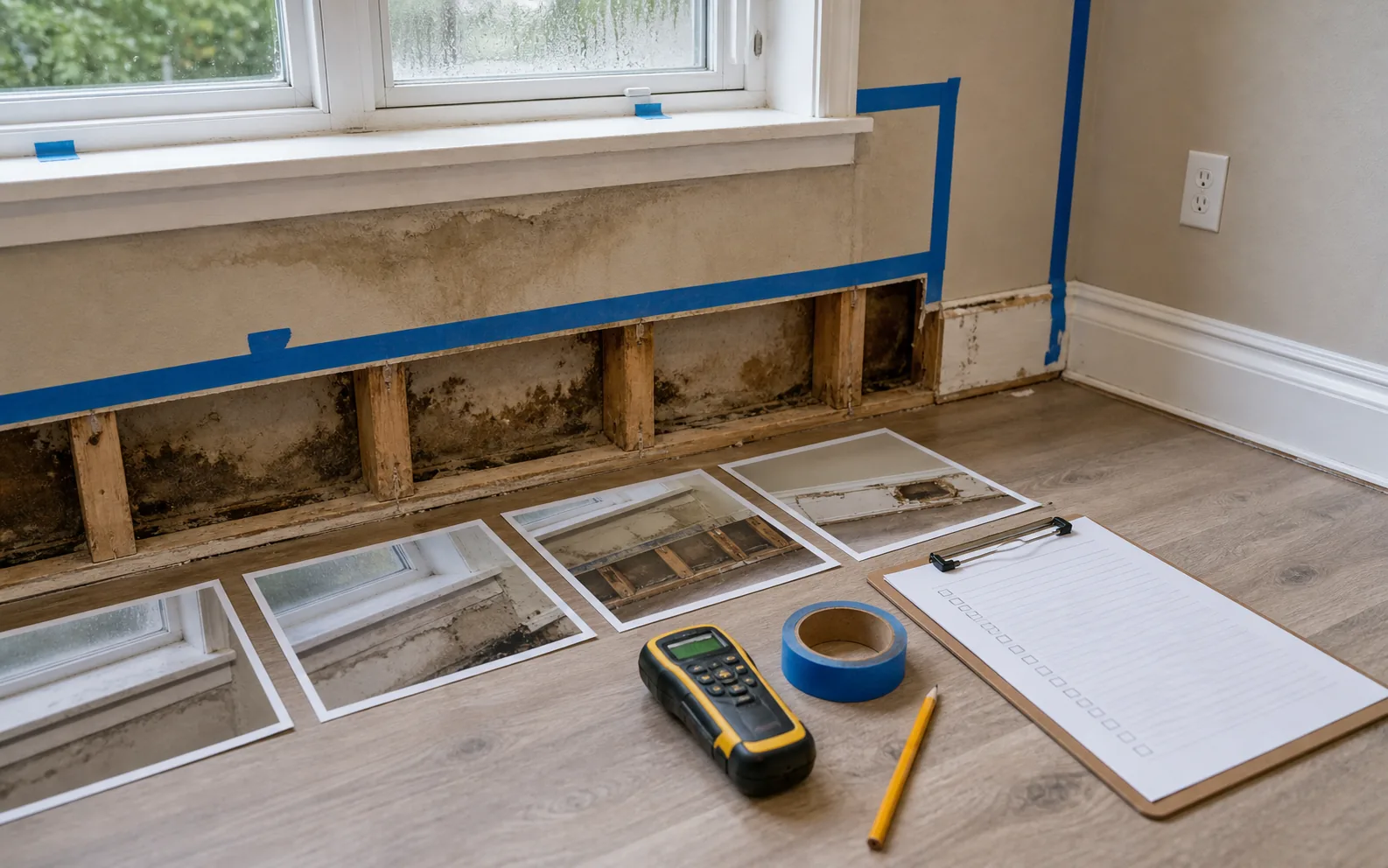
Before new drywall, paint, flooring, trim, cabinets, or tile cover the evidence, the damage should be documented. The repair scope should separate source correction from finish restoration so the same problem does not come back.
First steps before rebuilding
Make the area safe
If there is active water, electrical danger, ceiling collapse risk, contaminated water, or structural movement, safety comes first.
Stop the source
Drywall, flooring, paint, and trim repair will not last if the roof leak, window leak, plumbing leak, drainage problem, or exterior failure is still active.
Document the damage
Take wide photos, close-up photos, videos, photos of the suspected source, water lines, flooring transitions, damaged trim, damaged cabinets, insulation, framing, and any materials removed.
Separate mitigation from rebuild
Emergency dry-out and demolition are not the same as finish restoration. The rebuild scope should explain what gets replaced, what gets repaired, and where matching stops.
Confirm hidden-condition process
Water damage often changes after materials are opened. The contract should explain how discoveries are photographed, priced, approved, and scheduled.
Photos to take before water damage repairs
FloodSmart/NFIP guidance says to document damage before cleanup, including clear photos and videos, wide shots and close-ups, damaged materials, samples, serial numbers, and receipts.
- Each affected room from all corners
- The suspected source of water
- Ceiling stains
- Wall stains
- Water lines or swelling
- Flooring transitions
- Baseboards and trim
- Cabinets and toe kicks
- Wet insulation or drywall cuts
- Exposed framing
- Appliance or plumbing labels
- Exterior roof, siding, window, or drainage areas if relevant
- Any materials removed before disposal
Questions to ask before hiring for water damage repairs
| Question | Why it matters |
|---|---|
| Has the source been corrected? | Finish work will fail if the water path is still active |
| What has already been dried or removed? | The repair scope depends on what remains and what was documented |
| What areas need to stay open for review? | Covered damage is harder to verify later |
| What does the insurance estimate include? | Insurance line items may not match construction sequence |
| What is excluded? | Exclusions prevent arguments after work starts |
| How will hidden damage be handled? | Water often reveals more damage after demolition |
| Where does finish matching stop? | Paint, texture, flooring, trim, and cabinets may not match perfectly |
| Who handles upgrades? | Insurance repair and owner upgrades should be separated |
| What photos will be provided during work? | Documentation protects both homeowner and contractor |
Be careful after storms
After major weather events, homeowners may feel pressure to hire quickly. Move fast on safety and mitigation, but slow down before signing a vague rebuild contract.
Get the scope in writing, understand the payment schedule, and make sure the contractor explains what is included and excluded. The FTC warns homeowners after weather emergencies to check contractors, get written estimates and contracts, avoid blank contracts, and not rely on a contractor alone to explain insurance coverage.
Finish matching should be discussed before rebuild work starts
Restoration work should clarify paint match limits, flooring transitions, trim profiles, cabinet repairs, texture matching, and whether adjacent surfaces are included. Without those decisions, a room can be technically repaired and still look like a patch.
Insurance repair and owner upgrades should also be separated. If the homeowner wants a better material, a larger repair area, or added remodeling work, the scope should show what is repair work and what is an owner upgrade.
Related next steps
Checklist
- Source corrected
- Mitigation complete
- Photos taken
- Scope reviewed
- Hidden damage process
- Finish matching limits
- Upgrade choices
- Final walkthrough
Related project
Storm Repair and Finish Restoration
See how damage documentation, source correction, and finish matching show up in restoration planning.